
Foot pain from standing all day is one of the most common complaints podiatrists see, and it especially affects nurses, teachers, chefs, tradies, retail workers, and anyone else whose job keeps them on their feet for hours at a time.
The causes are varied. It could be the structure of your foot, the shoes you’re wearing, the surface you’re standing on, the way your load is distributed, or a combination of all of these.
What matters is understanding what’s actually driving the pain, because that determines what will actually fix it.
Quick Summary
- Prolonged standing keeps the foot under a sustained static load, which commonly causes plantar fasciitis and arch fatigue.
- Supportive footwear, regular calf and plantar fascia stretching, and anti-fatigue matting are effective first-line strategies for managing foot pain from standing.
- If foot pain persists, spreads to the ankle or knee, or changes the way you walk, a podiatry assessment can identify the underlying cause and prevent it from becoming a chronic condition.
Why standing all day causes foot pain
Your feet are doing a lot of work when you’re on them for hours at a time. With each step, the plantar fascia absorbs up to 110% of your body weight.
Interestingly, standing still can actually be harder on the foot than walking. Walking shifts weight between feet and allows the calf muscles to pump blood back up the leg, while prolonged static standing keeps the foot under sustained load with no relief.
The most common conditions that develop from prolonged standing include:
- Plantar fasciitis — inflammation or overload of the plantar fascia. Typically felt as a sharp pain under the heel or arch. Often worst in the morning or after a period of sitting.
- Arch fatigue — a general aching along the inside of the foot, sometimes extending toward the ankle.
- Forefoot pain — pressure and pain across the ball of the foot from sustained weight-bearing.
- Achilles tendinopathy — tightness or aching at the back of the heel when the calf muscles work overtime to compensate.
There are lots of ways to relieve pain, but a podiatry appointment is the best way to identify and treat the underlying cause. Book a podiatry assessment at Prosper Health Group.
The best ways to relieve foot pain after standing all day
Stretch regularly
Many people who spend long hours on their feet are not stretching enough. And the calf and plantar fascia are often the tightest spots.
When the calf is restricted, more load is transferred to the plantar fascia with every step. So stretching is not just general wellness advice; it directly addresses one of the main causes.
A calf stretch pushing against a wall (back leg straight, front knee bent, held for 30 seconds each side) targets the gastrocnemius, the large calf muscle with the most influence on plantar fascia tension.
A plantar fascia stretch (seated, foot crossed over the knee, toes gently pulled back toward the shin) is best done before your first steps in the morning, when the tissue is at its most loaded.
Strengthen your feet and calves
Stretching addresses tightness, but strengthening addresses the underlying weakness that makes the foot vulnerable in the first place.
The intrinsic muscles of the foot tend to weaken in people who spend most of their day in enclosed footwear. Towel toe curls are a simple way to target them: place a small towel on a hard floor and scrunch it toward you using only your toes.
Single-leg calf raises build load tolerance in the Achilles tendon and the plantar fascia over time.
Neither exercise is dramatic, but consistency with both makes a genuine difference to how the foot handles a long shift.
Review your footwear (and consider orthotics)
Worn-out work shoes, flat canvas shoes, and fashion footwear offer little protection against a full day on hard floors. Look for a firm midsole and enough room for the toes to spread naturally and sit flat. Anti-fatigue mats can also lessen the impact of standing all day on hard surfaces.
If appropriate footwear and matting are not enough, custom orthotics made to match your exact foot structure can redistribute load away from the areas that are most overworked.
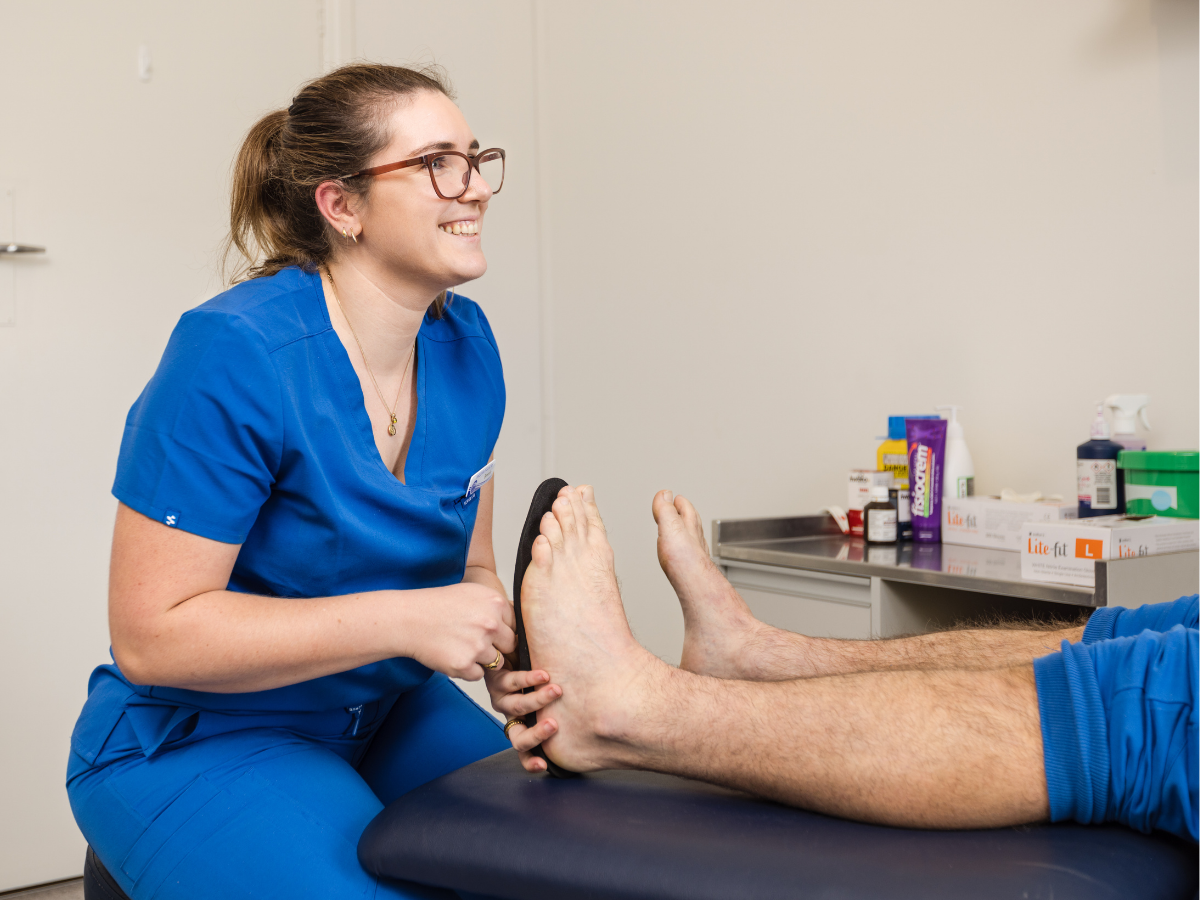
Prosper Health Group designs custom orthotics, using 3D scanning technology to capture an accurate model of each foot. We then 3D print and finish your orthotics in-house. We can also make adjustments until we’ve got the perfect fit.
See more about orthotics at Prosper Health Group.
Take regular breaks
Static standing is actually harder on the feet than walking, because it keeps both feet under sustained load with no relief.
Brief movement breaks, like a short walk every 30 to 45 minutes, help reset this. Shifting your weight, using a footrest, or alternating between sitting and standing reduces the cumulative load on the plantar fascia and surrounding structures.
See a podiatrist
If you’ve been managing symptoms for more than four weeks without improvement, the pain is spreading into the ankle or knee, or you’re noticing yourself walking differently to protect the sore area, it’s time to get a proper assessment.
At Prosper Health Group, this starts with a detailed history of your symptoms, your work environment, and your footwear, followed by a video gait analysis that captures exactly how load is being distributed through your feet and lower limbs in real time.
From there, your podiatrist builds a treatment plan targeting the specific cause of your pain, not just the symptoms.
Book a podiatry assessment at Prosper Health Group.
Ask about shockwave therapy
For persistent heel pain that has not responded to other methods of relief, shockwave therapy is a well-evidenced next step.
It delivers acoustic waves to the affected tissue, stimulating the body’s natural repair process and improving blood flow to an area that often has poor circulation. Sessions take around 10 to 15 minutes. Most people need between 3 and 5 sessions, and there’s no downtime.
See how shockwave therapy works.
Your feet carry you through every shift. Look after them.
Foot pain from standing all day is common, but it’s not something you have to just accept as part of the job. Most cases have a clear cause and solution. The earlier it’s addressed, the less likely it is to become a chronic problem that takes months to unwind.
If your feet are consistently sore by the end of a shift, book an appointment with the podiatry team at Prosper Health Group in Highton or Colac. A single assessment can give you a clear picture of what’s driving the problem and a practical plan to fix it.
Book an appointment at Prosper Health Group