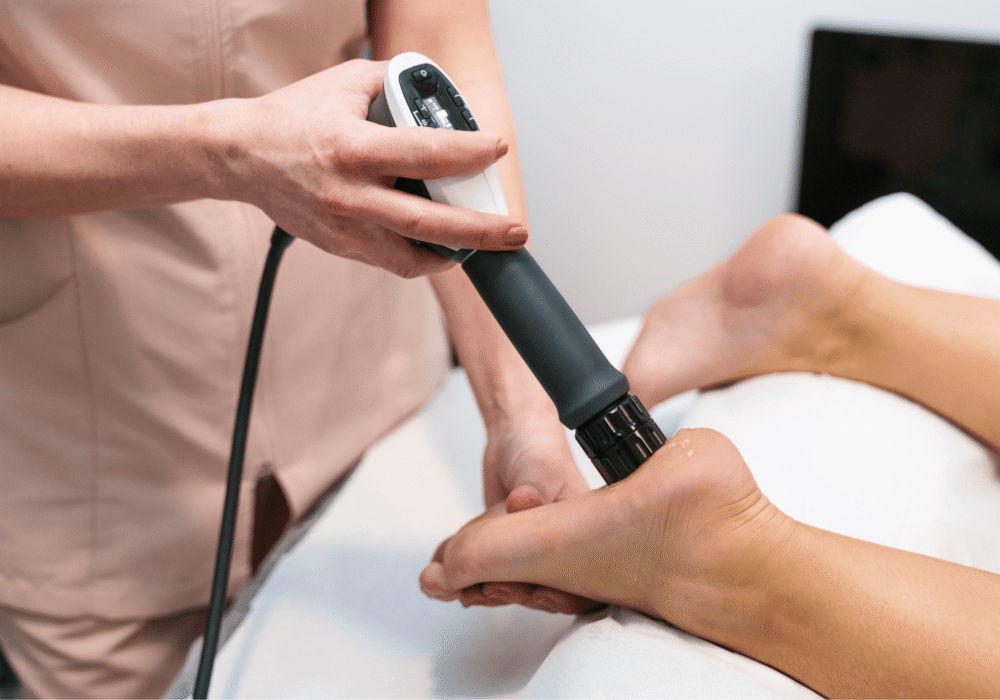
Shockwave therapy is an effective treatment for heel pain, particularly for chronic plantar fasciitis that hasn’t responded to rest, stretching, or orthotics. Multiple clinical trials show significant reductions in pain and improvements in function, with benefits that hold up over the long term.
Quick Summary
- Shockwave therapy is a non-invasive, clinically supported treatment for heel pain.
- It works by stimulating the body’s natural healing response in damaged soft tissue.
- Research shows it outperforms placebo, and works best when combined with stretching and rehabilitation.
What causes heel pain?
Heel pain is one of the most common complaints podiatrists see. The most frequent culprit is plantar fasciitis, which is an overload injury to the plantar fascia, the thick band of connective tissue running along the bottom of your foot from your heel bone to your toes.
Repeated stress causes small tears in the tissue, triggering that familiar sharp, stabbing pain with your first steps in the morning.
Common causes include:
- Spending long hours on hard floors
- Running longer distances without proper training
- Carrying extra weight
- Tight calf muscles
- Wearing unsupportive footwear
It’s especially common in runners, teachers, nurses, and tradespeople. And it can be stubborn. Many people try rest, stretching, and orthotics for months without lasting relief.
How shockwave therapy treats heel pain
Shockwave therapy delivers high-energy acoustic waves through the skin to the affected tissue using a handheld device. It sounds more intense than it is; sessions take around 10 to 15 minutes, and most people tolerate them well, though some mild discomfort can occur.
The waves trigger some important responses in the body:
- They create microscopic stimulation in the damaged tissue, activating the body’s natural repair process.
- They boost blood flow to the area, bringing more oxygen and nutrients to tissue that often has poor circulation.
- They stimulate the production of collagen, the building block of healthy tendons and fascia, and help reduce pain signals from the affected area.
- They can also break down calcium deposits that have built up in the heel.
Shockwave therapy targets the underlying issue causing the pain, rather than just masking it with a short-term fix.

The research says: shockwave therapy works for heel pain
The evidence behind shockwave therapy for heel pain is strong.
Studies have found significant, lasting reductions in heel pain and improvements in function in patients with chronic plantar fasciopathy, with benefits that hold up over a two-year follow-up period.
In one large controlled trial of 245 patients, shockwave therapy produced a 72.1% reduction in pain scores at 12 weeks, with results improving even further after 12 months.
While corticosteroid injections may offer similar levels of short-term relief, shockwave therapy produces better long-term outcomes, with no risk of tissue damage from repeated injections.
Research also shows that pairing shockwave therapy with a targeted stretching programme produces significantly better outcomes than shockwave alone.
The takeaway: Shockwave therapy isn’t a new or experimental option. It’s a proven effective treatment backed by years of solid clinical evidence.
How shockwave therapy compares to other treatments
Most people with heel pain start with the basics: rest, stretching, supportive footwear, and orthotics.
But for those with persistent or chronic heel pain, it’s worth understanding how other options stack up.
| Treatment | Short-term relief | Long-term outcomes | Invasive? |
| Rest, stretching & orthotics | Reduces mild to moderate pain | Limited success with chronic or degenerative cases | No |
| Corticosteroid injection | Fast-acting pain reduction | Fades over time, risk of tissue damage with repeat injections | No |
| Surgery | Effective pain relief post-recovery | Effective, but carries recovery risks | Yes |
| Shockwave therapy | Meaningful pain reduction within weeks | Strong long-term results | No |
Shockwave therapy sits in a useful middle ground; more targeted than conservative care, less risky than surgery, and with a stronger long-term track record than injections.
Is shockwave therapy right for you?
Shockwave therapy is most effective for people who have been dealing with heel pain for more than a few months and haven’t found lasting relief through stretching, footwear changes, or orthotics.
It’s particularly well-suited for chronic plantar fasciitis, but it isn’t the right fit for everyone. It’s not recommended during pregnancy, for people with certain blood-clotting disorders, or over areas with active infection or bone tumours.
The best way to know if it’s right for your situation is to get a proper assessment from a podiatrist, who can diagnose the underlying cause of your heel pain and recommend the most appropriate treatment path.
Heal your heels with shockwave therapy at Prosper Health Group
At Prosper Health Group, shockwave therapy is offered at our Geelong and Colac clinics as part of a personalised approach to heel pain treatment.
Most patients need three to five sessions, spaced one week apart. Each session takes around 10 to 15 minutes. There’s no downtime, and most people return to normal activity the same day.
If you feel like you’ve tried everything else, shockwave therapy could be your next step towards freedom from heel pain.
Book an appointment at our Geelong or Colac clinic today.